







0%
THE MUSIC
OF THE PRIMES
THERE'S SO MANY DIFFERENT WORLDS SO MANY DIFFERENT SUNS AND WE HAVE JUST ONE WORLD BUT WE LIVE IN DIFFERENT ONES
Dire Straits “Brothers in Arms”
01 A list of the primes is the mathematician's own periodic table
01

A list of the primes is the mathematician's own periodic table

02 When things get too complicated, it sometimes makes sense to stop and wonder: Have I asked the right question?
02

When things get too complicated, it sometimes makes sense to stop and wonder: Have I asked the right question?

Enrico Bombieri, “Prime Territory” in The Science
03 Languages die and mathematical ideas do not. “Immortality” may be a silly word, but...
03

Languages die and mathematical ideas do not. “Immortality” may be a silly word, but probably a mathematician has the best chance of whatever it may mean

Michael Berry, University of Bristol
04 The Riemann Hypothesis is a mathematical statement that you can decompose the primes into music...
04

The Riemann Hypothesis is a mathematical statement that you can decompose the primes into music. That the primes have music in them is a poetic way of describing this mathematical theorem. However, it's highly post-modern music

Michael Berry, University of Bristol
05 A problem in number theory is as timeless as a true work of art
05

A problem in number theory is as timeless as a true work of art

David Hilbert, Introduction to Legh Wilber Reid, The Elements of the Theory of Algebraic Numbers
06 I propose to consider the question, “Can machines think?”
06

I propose to consider the question, “Can machines think?”

Alan Turing, Computing Machinery and Intelligence
07 Quantum drums
07

Quantum drums

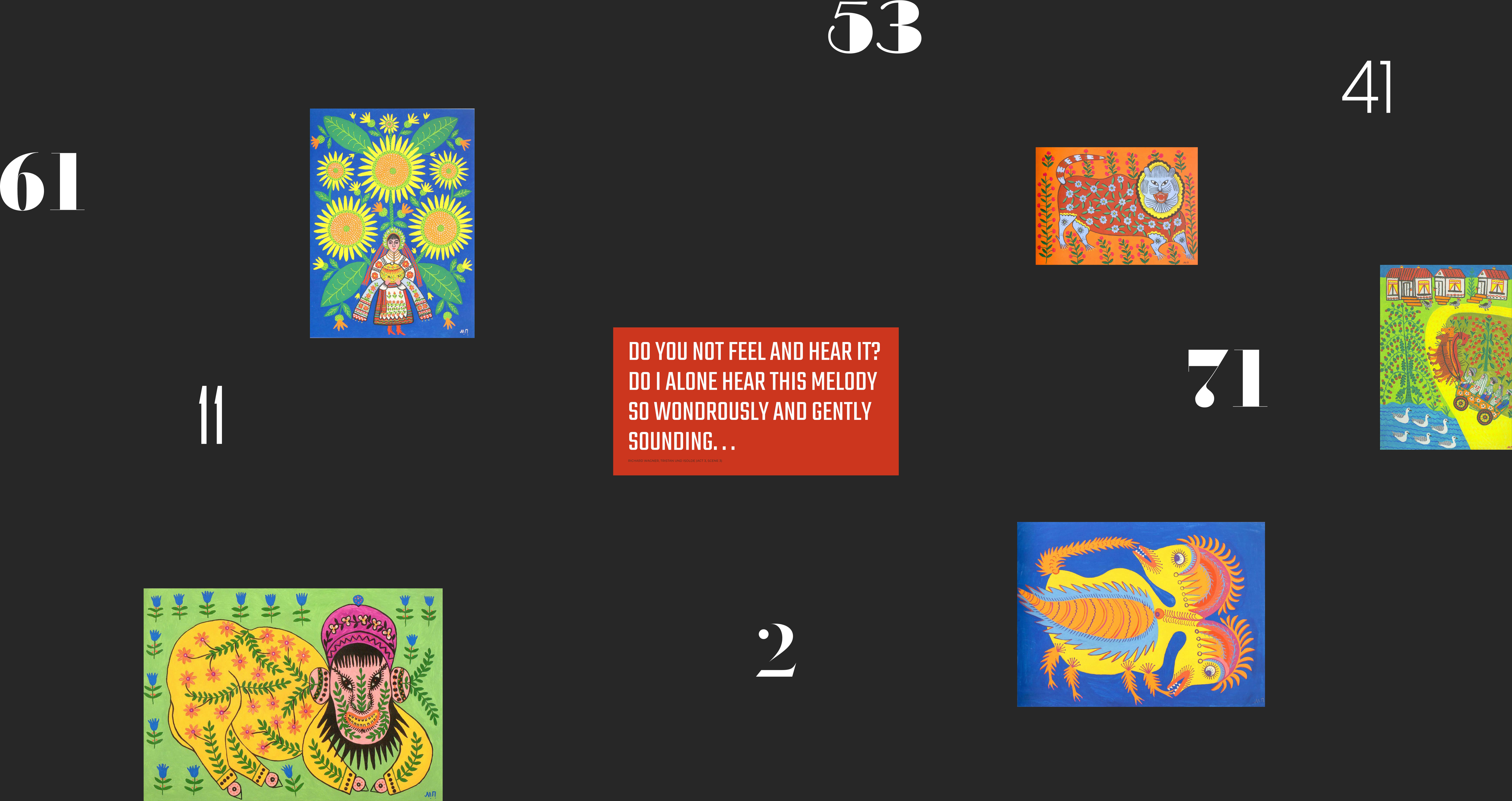
08 Do you not feel and hear it? Do I alone hear this melody so wondrously and gently sounding. . .
08

Do you not feel and hear it? Do I alone hear this melody so wondrously and gently sounding. . .

Richard Wagner, Tristan und Isolde (Act 3, Scene 3)
09 The birth of Internet cryptography
09

The birth of Internet cryptography

10 If Gauss were alive today, the would be a hacker
10

If Gauss were alive today, the would be a hacker

Peter Sarnak, professor at Princeton University
11 42 — the answer to the Ultimate Question
11

42 — the answer to the Ultimate Question

12 The history of mathematics resembles musical analysis of a symphony. There are a number of themes..
12

The history of mathematics resembles musical analysis of a symphony. There are a number of themes. You can see when a given theme appears for the first time. Then it gets mixed up with the other themes and the art of the composer consists in handling them all simultaneously. The history of mathematics is just the same

Andre Weil, Two Lectures on Number Theory, Past and Present
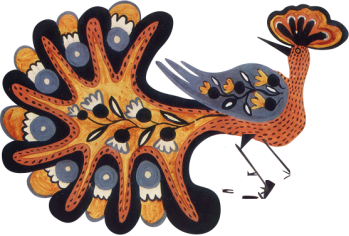
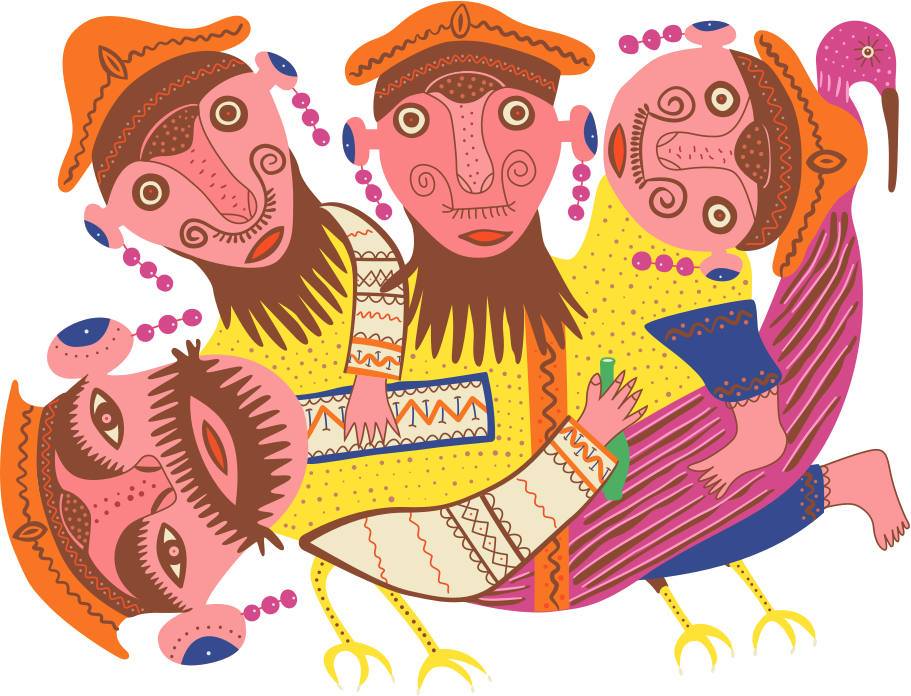
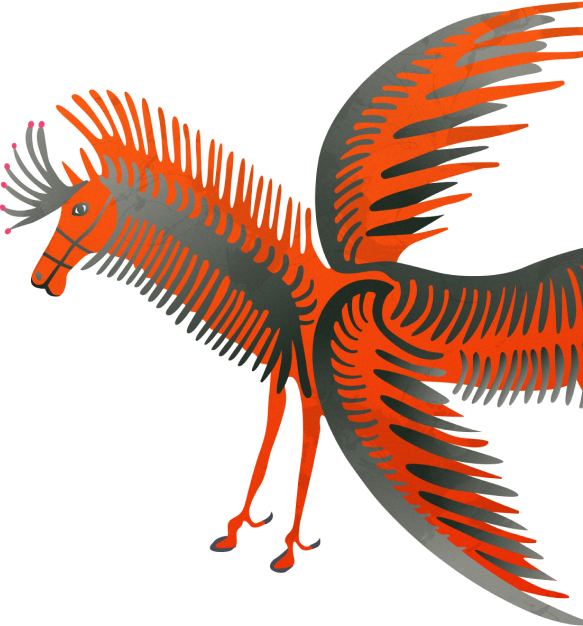
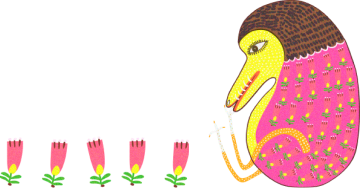
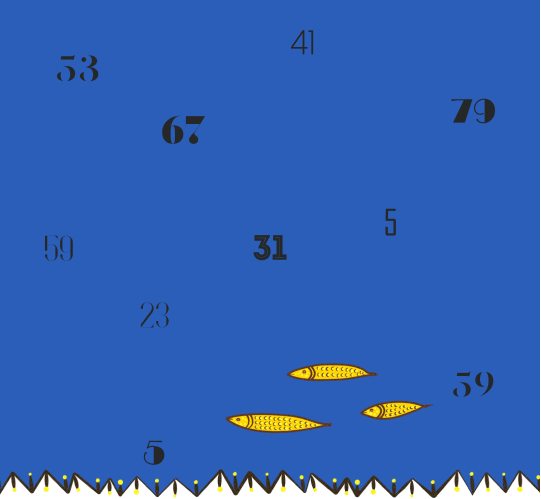
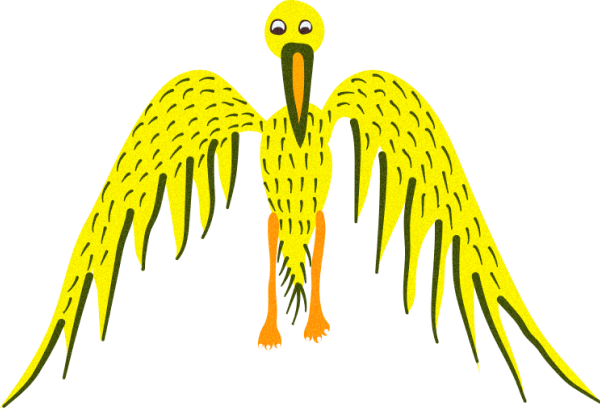
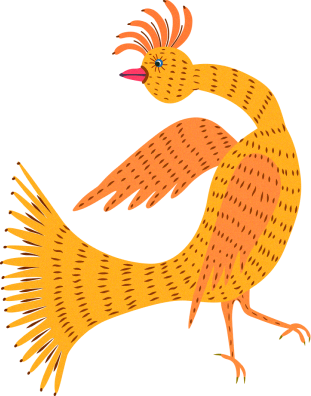
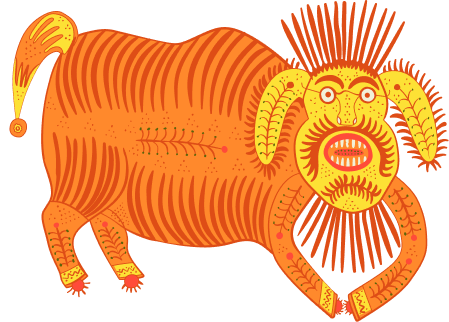
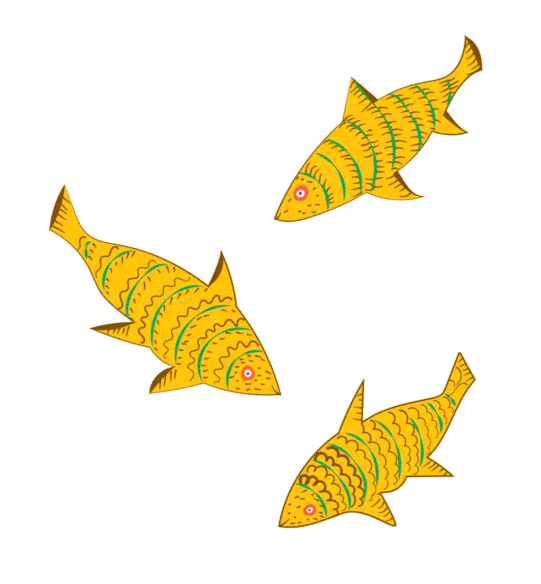
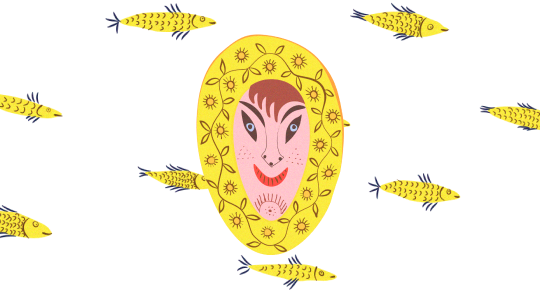
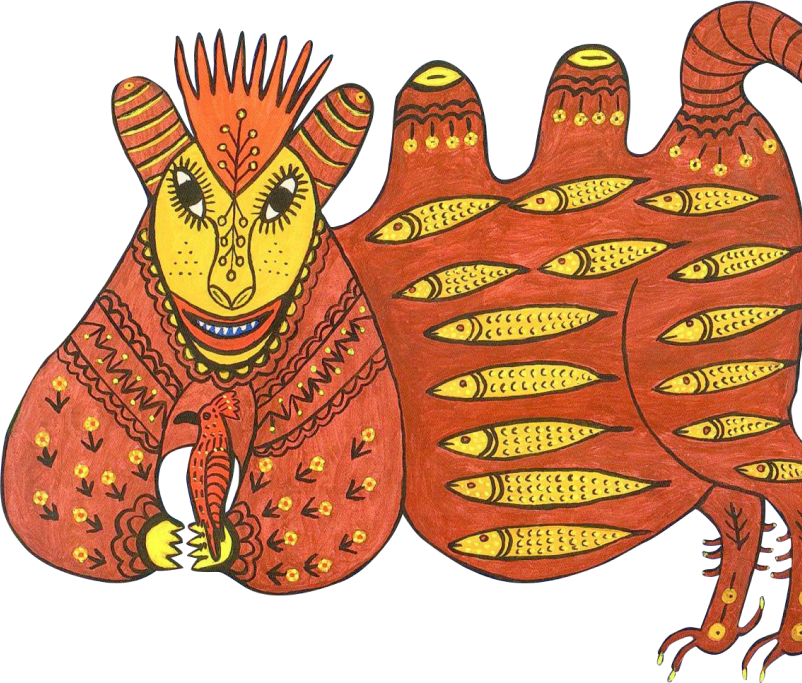
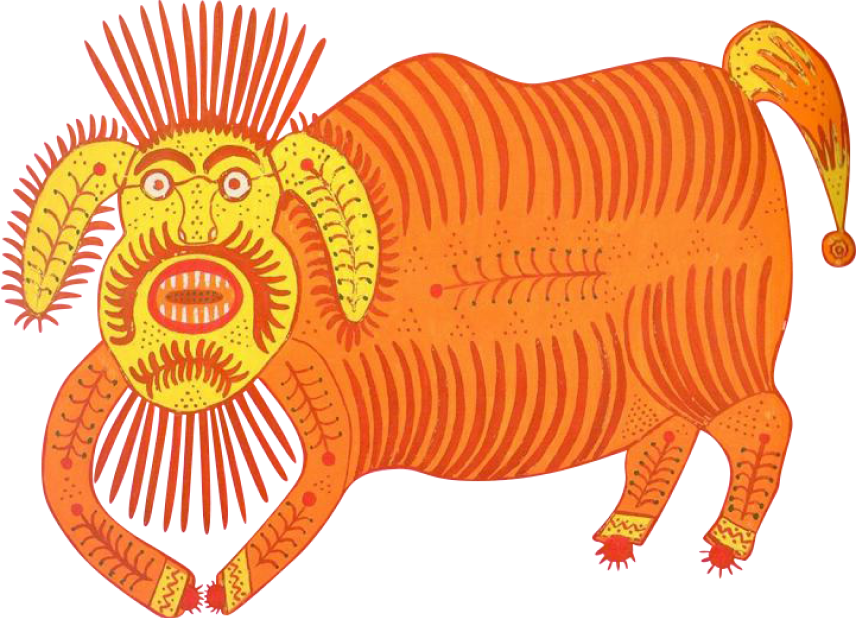
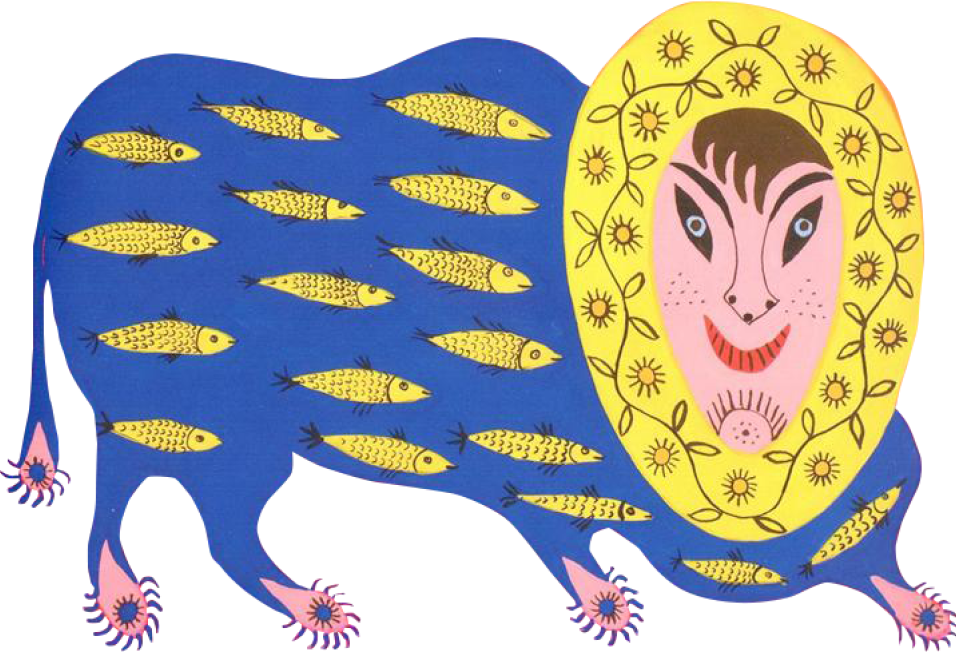
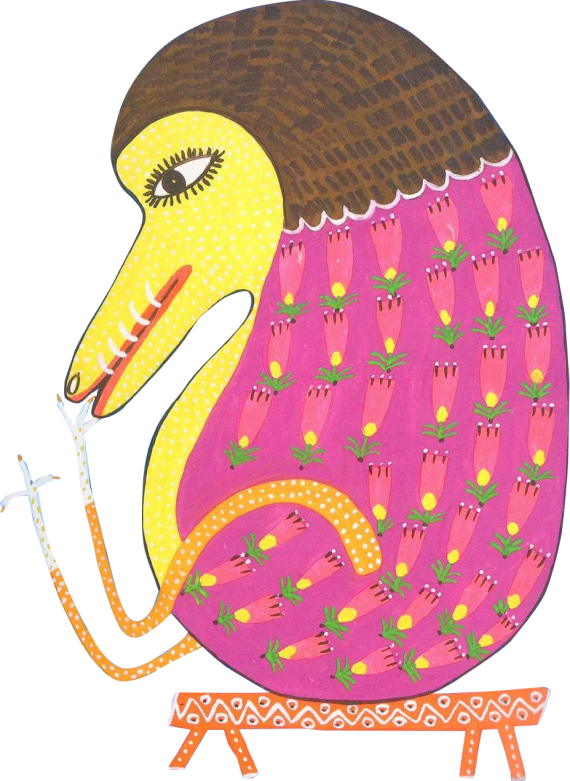
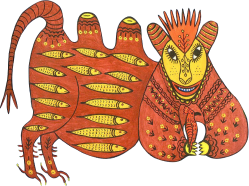
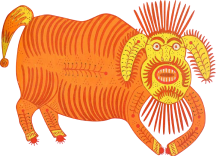
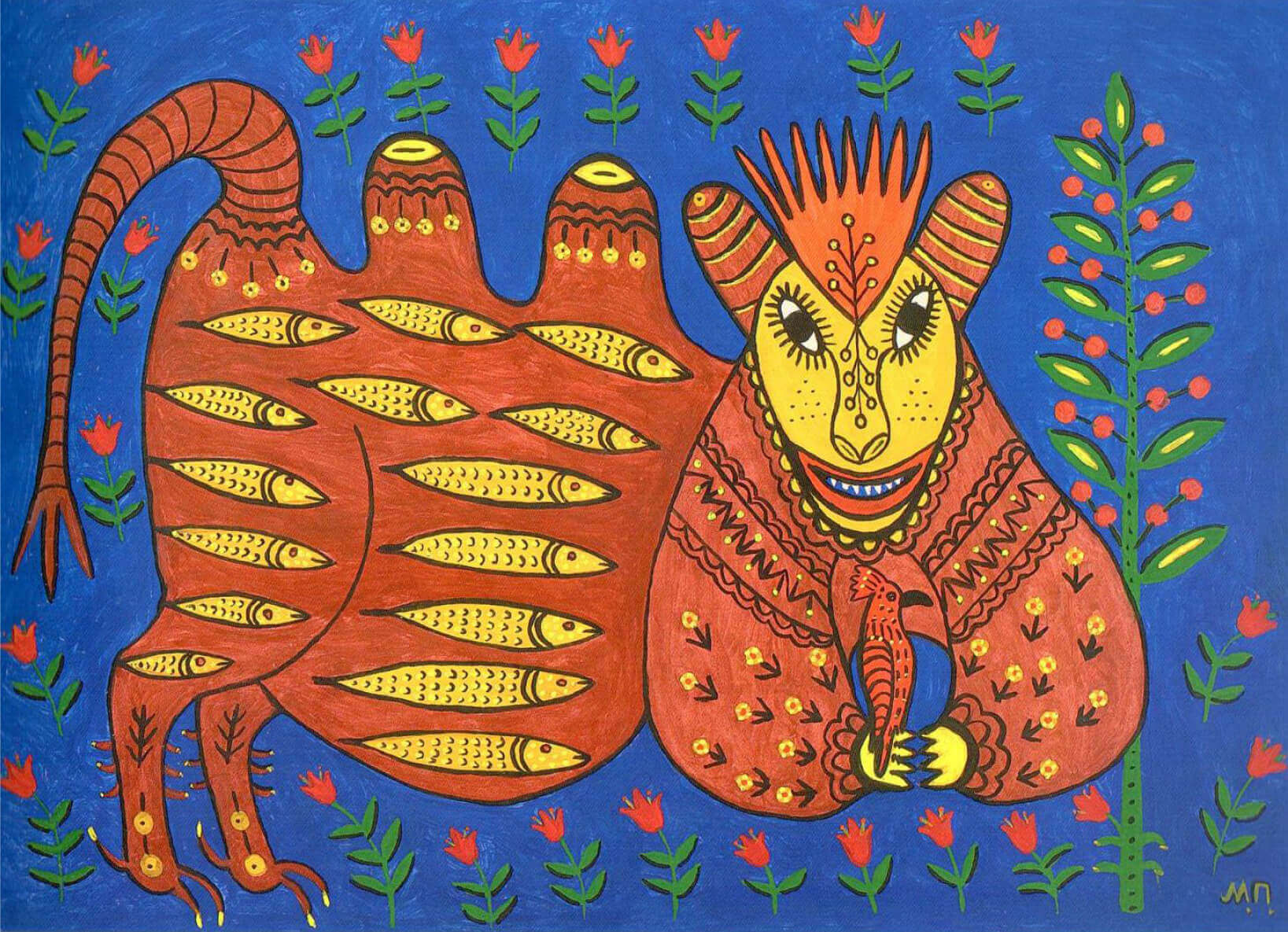
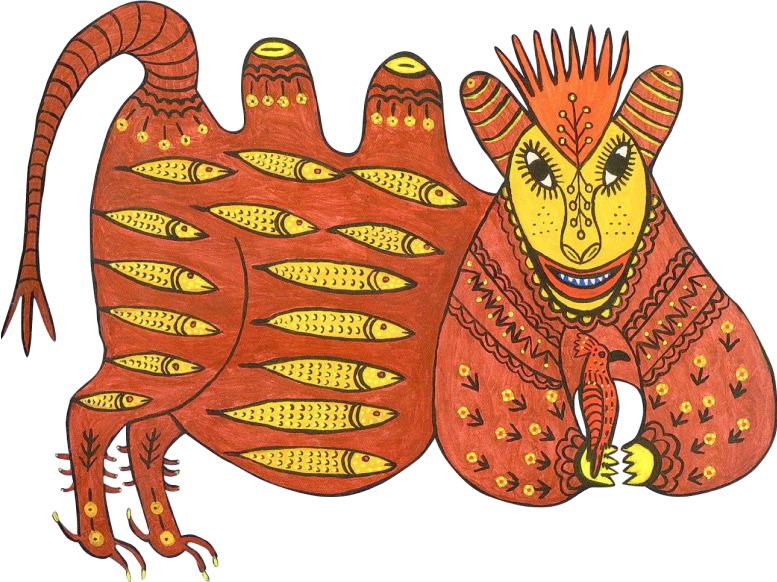
A fish king has caught a hoopoe and is full of joy.
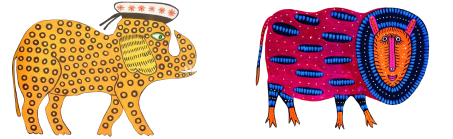
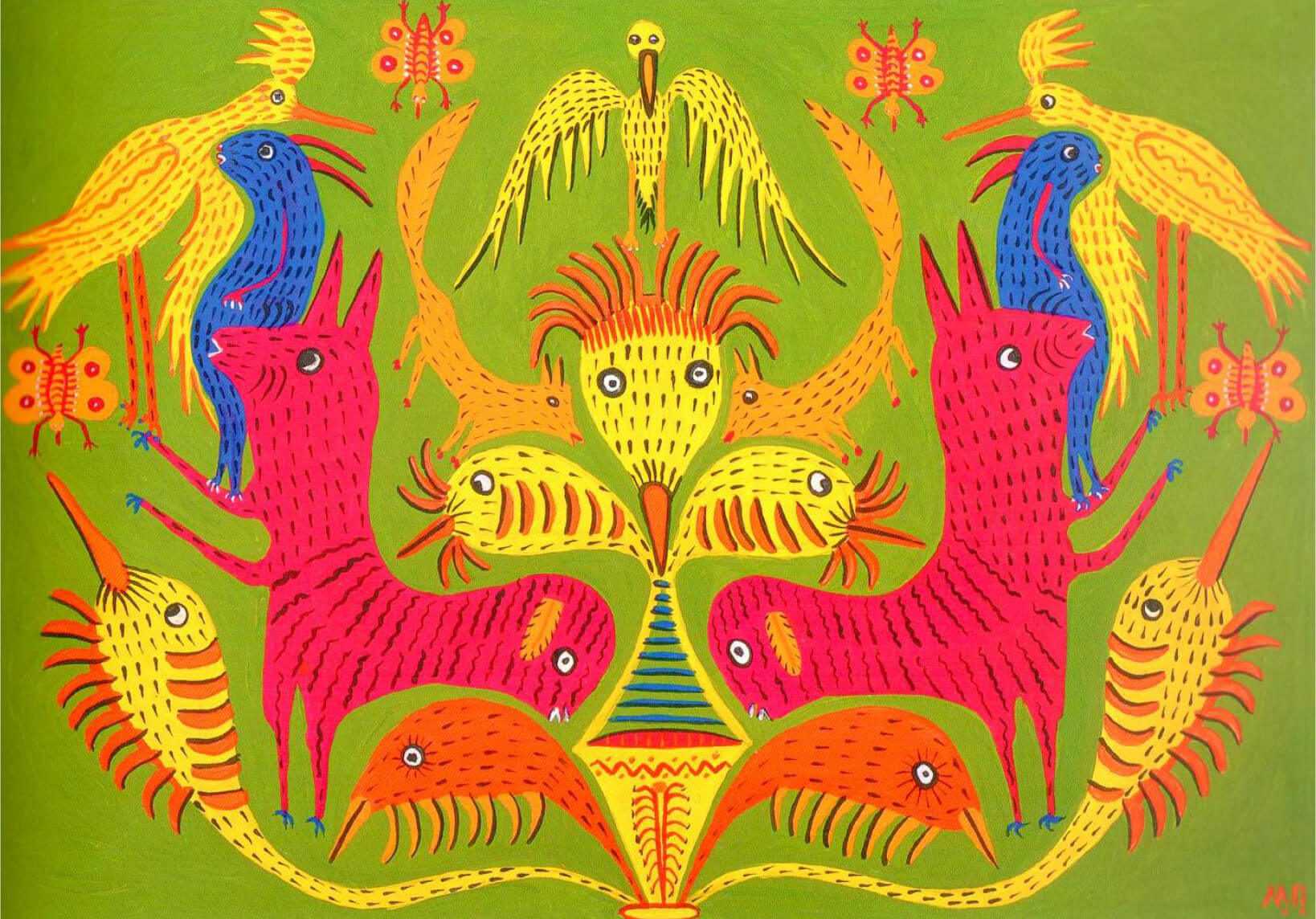
Menagerie.

Despite their randomness, universal character.

prime numbers have a timeless,

A fish king has caught a hoopoe and is full of joy.
Menagerie.
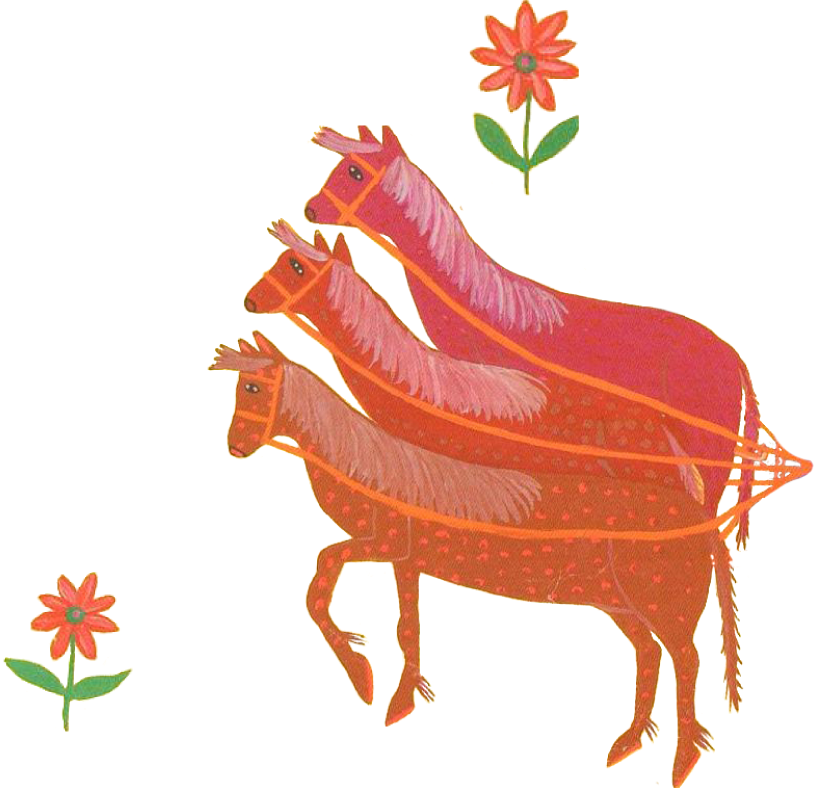
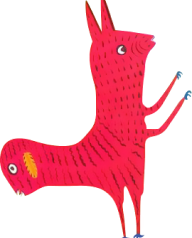
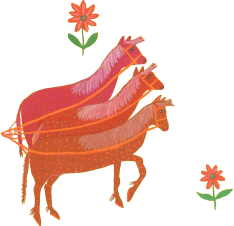
Lovely spring, what did you bring.

The Chinese believed that the primes were macho numbers which resisted any attempt to break them down into a product of smaller numbers.

When things get too complicated, it sometimes makes sense to stop and wonder: Have I asked the right question?

Enrico Bombieri, “Prime Territory” in The Science

The first evidence that humankind knew about the special qualities of prime numbers is the Ishango bone that dates from 6500 bc, that was discovered in 1960 in the mountains of central equatorial Africa. Marked on it are three columns containing four groups of notches. In one of the columns we find 11, 13, 17 and 19 notches, a list of all the primes between 10 and 20.

The Chinese were the first culture attributed female characteristics to even numbers and male to odd numbers. The primes were macho numbers which resisted any attempt to break them down into a product of smaller numbers.

The ancient Greeks first discovered, in the 4th century BC that every number could be constructed by multiplying prime numbers together.

The librarian of the ancient Greek research institute in Alexandria was the first person we know of to have produced tables of primes. Eratosthenes in the 3rd century BC discovered a procedure for determining which numbers are prime in a list of the first 1,000 numbers. The procedure was later christened the sieve of Eratosthenes.

In the 4th century BC the Greeks discovered that every number could be constructed by multiplying prime numbers together.
A fish king has caught a hoopoe and is full of joy.
Menagerie.
Lovely spring, what did you bring.
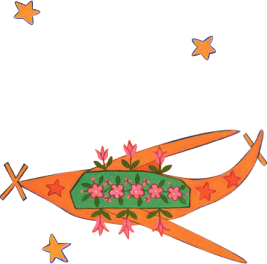
An outer space memory.
Languages die and mathematical ideas do not. “Immortality” may be a silly word, but probably a mathematician has the best chance of whatever it may mean.
Michael Berry, University of Bristol

“Who of us would not be glad to cast a glance at the next advances of our science and at the secrets of its development during future centuries?”

One day in August 1900 David Hilbert challenged the audience of Sorbonne with a list of 23 problems that he believed should set the course for the mathematical explorers of the 20th century.

But there was one problem, the 8th on Hilbert's list, which looked as if it would survive the century without a champion: the Riemann Hypothesis.

There is a German myth about Frederick Barbarossa, a much-loved German emperor who died during the Third Crusade. A legend grew that he was still alive, asleep in a cavern in the Kyffhauser Mountains. He would awake only when Germany needed him. Somebody allegedly asked Hilbert, “If you were to be revived like Barbarossa, after 500 years, what would you do?” His reply: “I would ask, ”Has someone proved the Riemann Hypothesis?””

As the 20th century drew to a close, most mathematicians had resigned themselves to the fact that this jewel amongst all of Hilbert's problems was not only likely to outlive the century but might still be unanswered when Hilbert awoke from his 500-year slumber.

Has someone proved the Riemann Hypothesis?
Menagerie.
Lovely spring, what did you bring.
An outer space memory.
A bunch of red flowers on read army day.
Riemann’s ideas would open up
radically new vistas
on the primes.

The Riemann Hypothesis is a mathematical statement that you can decompose the primes into music. That the primes have music in them is a poetic way of describing this mathematical theorem. However, it's highly post-modern music

Michael Berry, University of Bristol

The connection that Riemann managed to find between prime numbers and the points at sea level in the zeta landscape was about as direct as one could hope for. Riemann was able to produce an exact formula for the number of primes up to N by using the coordinates of these zeros.

The formula that Riemann concocted had two key ingredients. The first was a new function R(N) for estimating the number of primes less than N. Riemann realised that by using the points in the map of imaginary numbers that marked the places where the zeta landscape was at sea level, he could get rid of these errors and produce an exact formula counting the number of primes. This would be the second key ingredient in Riemann's formula.

Riemann made the stunning discovery — his function R(N) gave a reasonably good count of the number of primes up to N. By adding to this guess the height of each wave above the number N, he found he could get the exact number of primes. The error had been eliminated completely. Riemann had unearthed the Holy Grail: an exact formula for the number of primes up to N.

Riemann had unearthed the Holy Grail: an exact formula for the number of primes up to N.
Lovely spring, what did you bring.
An outer space memory.
A bunch of red flowers on read army day.
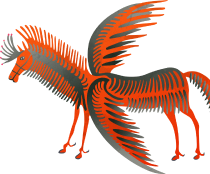
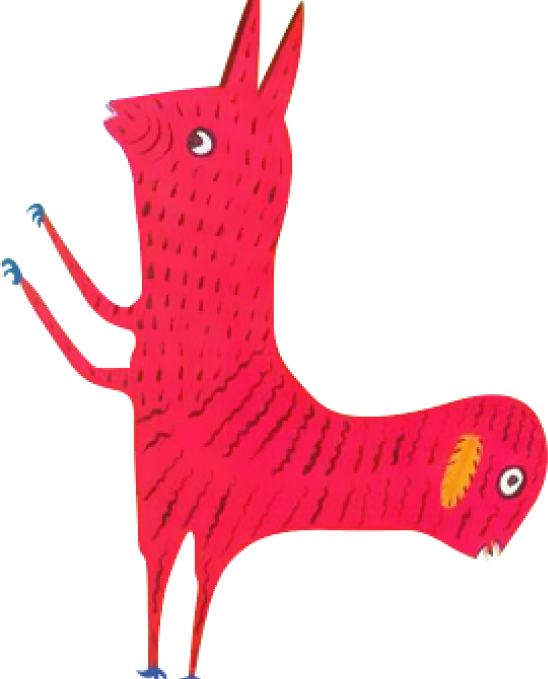
This beast went a catching sparrows.
A problem in number theory is as timeless as a true work of art
David Hilbert, Introduction to Legh Wilber Reid, The Elements of the Theory of Algebraic Numbers

What Riemann had done was to take each of the points on the map of the imaginary world that sat at sea level. Out of each point he had created a wave. By combining all these waves, he had an orchestra that played the music of the primes.

The zeros he calculated seemed to be miraculously arranged in a straight line running north-south through the landscape. It appeared as if every point at sea level had the same east-west coordinate, equal to 1/2.

Riemann's calculations indicated that these zeros were lining up as if along some mystical ley line running through the landscape. His belief that every point at sea level in his landscape would be found on this straight line is what has become known as the Riemann Hypothesis.

Riemann looked at the image of the primes in the mirror that separated the world of numbers from his zeta landscape. He saw the chaotic arrangement of the prime numbers on one side of the mirror transform into the strict regimented order of the zeros on the other side of the mirror.

What Riemann had also discovered was evidence of some ley line running through this landscape. The Riemann's ley line is now referred to as the critical line. Suddenly, the puzzle of the randomness of the primes in the real world has been replaced by the quest to understand the harmony of this imaginary looking-glass landscape.

What Riemann had also discovered was evidence of some ley line running through this landscape. The Riemann's ley line is now referred to as the critical line. Suddenly, the puzzle of the randomness of the primes in the real world has been replaced by the quest to understand the harmony of this imaginary looking-glass landscape.

An outer space memory.
A bunch of red flowers on read army day.
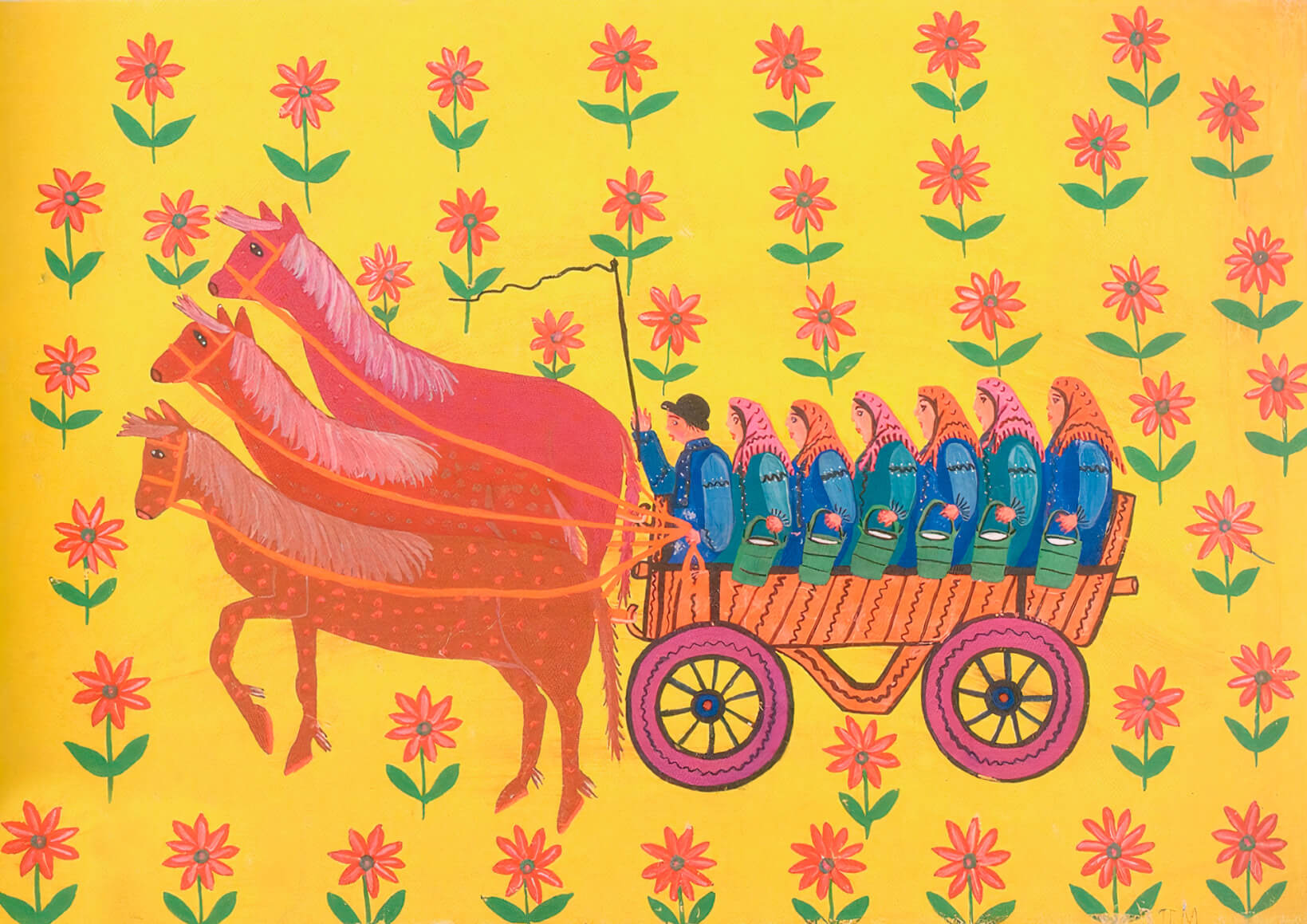
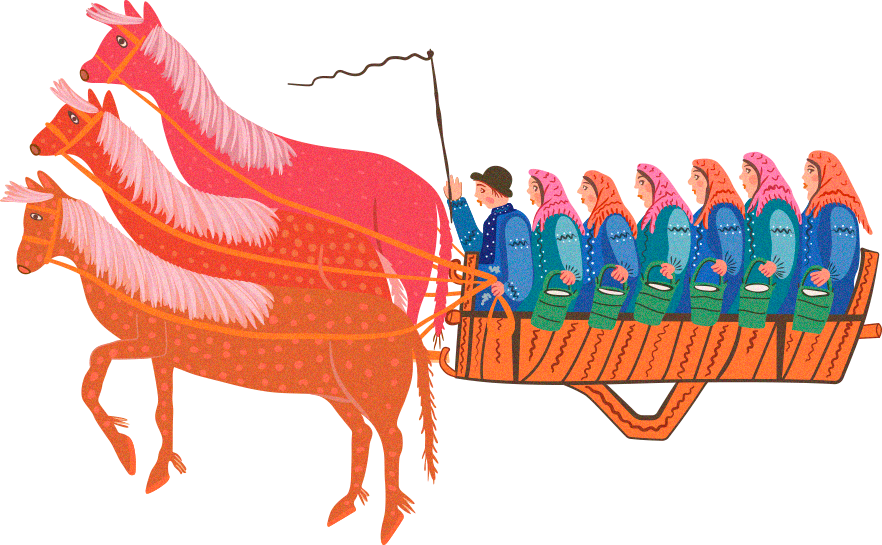
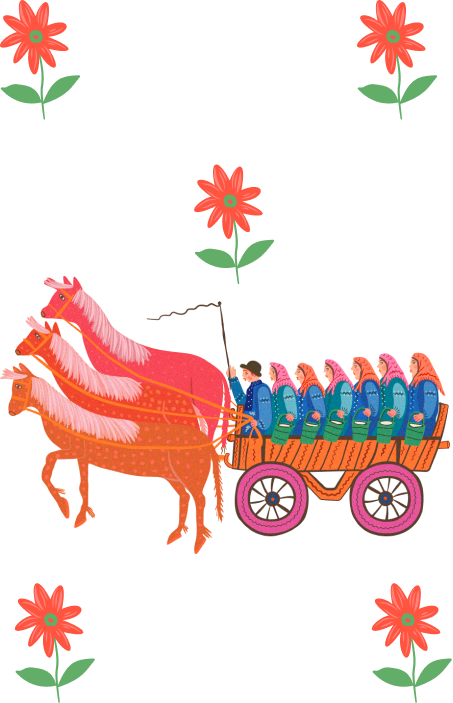
Ukrainian milkmaids work hard like miners.
I propose to consider the question, “Can machines think?”
Alan Turing, Computing Machinery and Intelligence

Turing came up with the idea of special machines that could effectively be made to behave like any person or machine that was doing arithmetic computations. They would later be known as Turing machines.

Turing's idea was based on a discovery made in 1873 by Georg Cantor, a German mathematician. He had found that there were different sorts of infinities. Cantor had shown that some decimal numbers would always be left over, however the fractions were matched with the real numbers. Turing took this technique and used it to produce a 'left-over' true statement for which the Turing machine could not possibly decide whether a proof existed. The beauty of Cantor's argument was that if you tried to adapt the machine to include this missing statement, there would always be another statement that had been missed. Turing had shown that none of his Turing machines could answer Hilbert's Decision Problem. This was his breakthrough: the idea of a universal machine.

By 1950 he had his new machine up and running and ready to start navigating the zeta landscape. Ted Titchmarsh had confirmed that the first 1,041 points at sea level fulfilled the Riemann Hypothesis. Turing went further and managed to make his machine check as far as the first 1,104 zeros and then, as he wrote, 'unfortunately at this point the machine broke down'.

Turing’s universal machine of the computer age.

marked the dawn

A bunch of red flowers on read army day.
Ukrainian milkmaids work hard like miners.
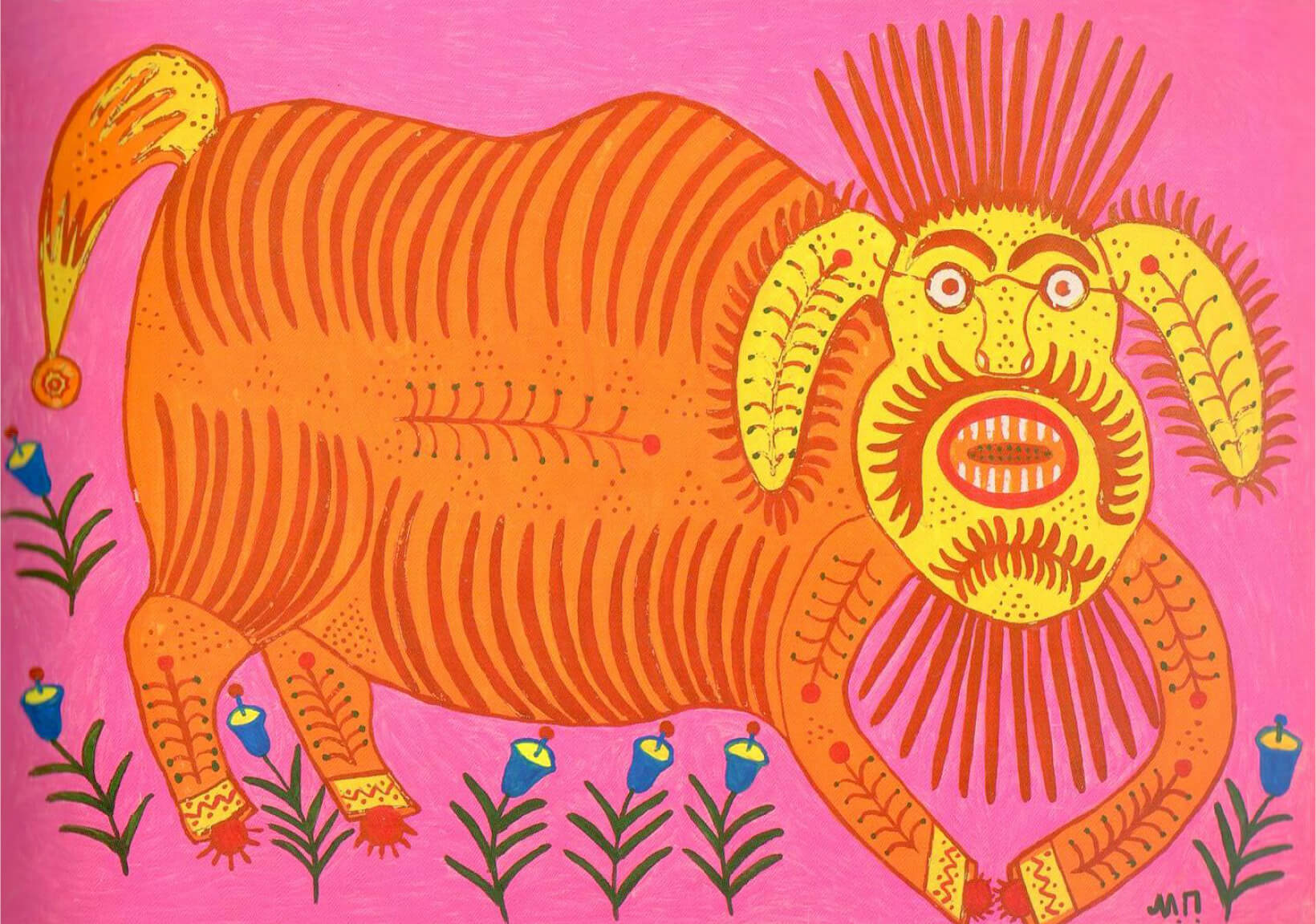
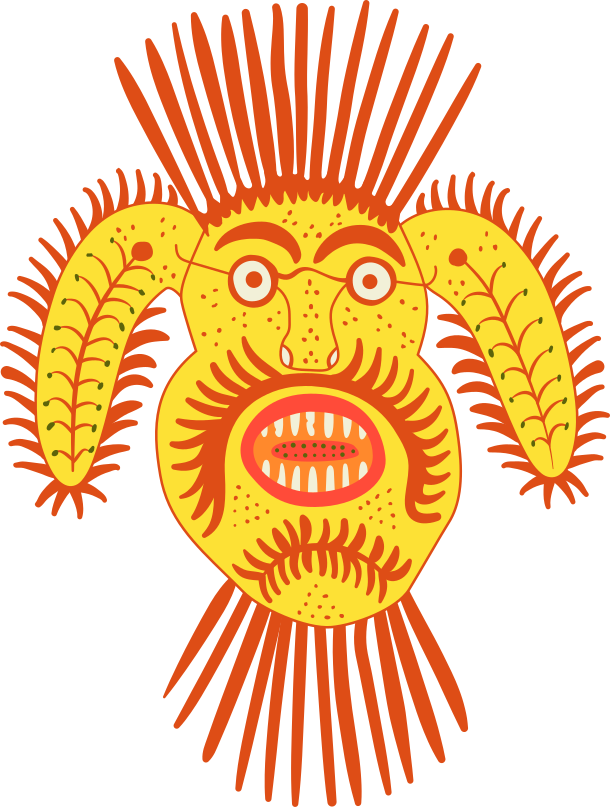
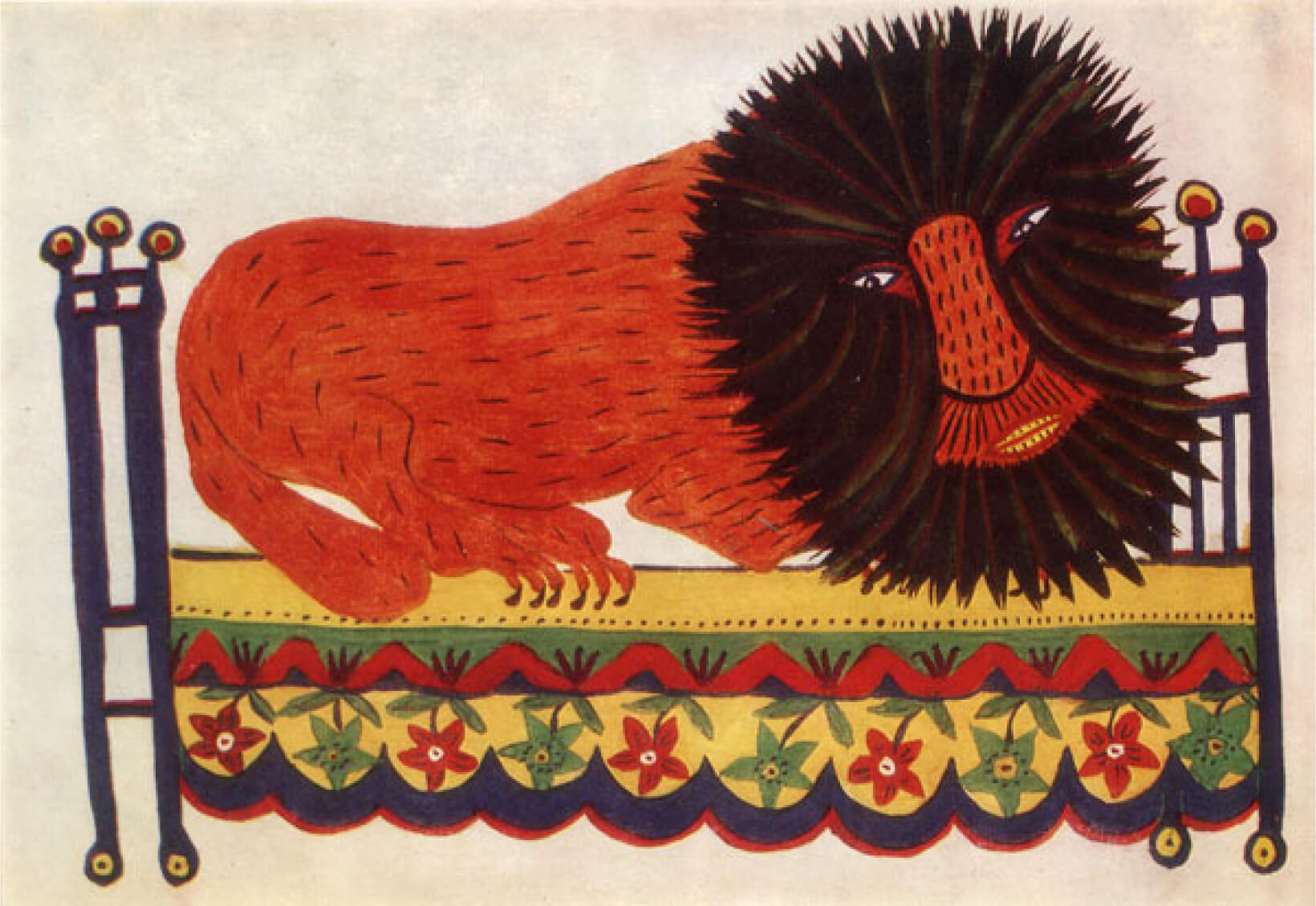
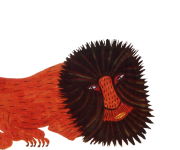
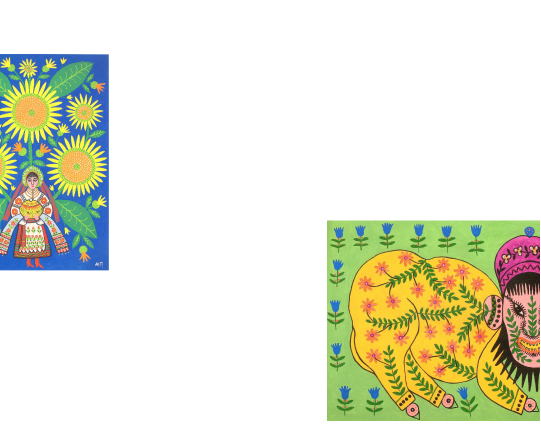
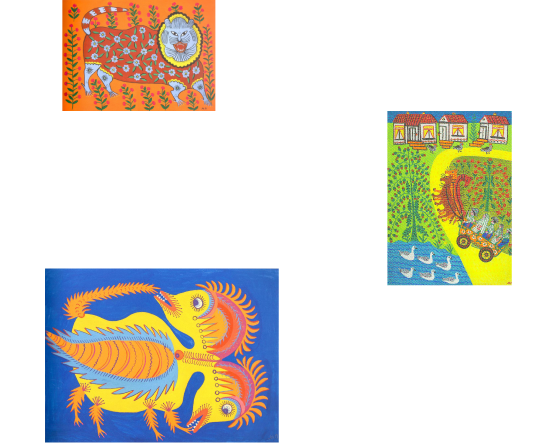
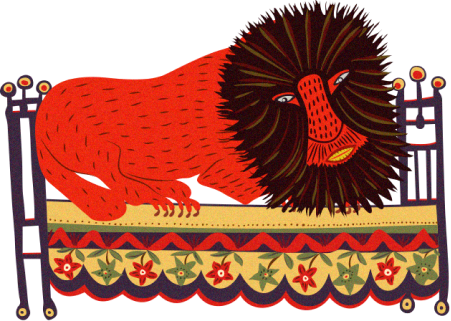
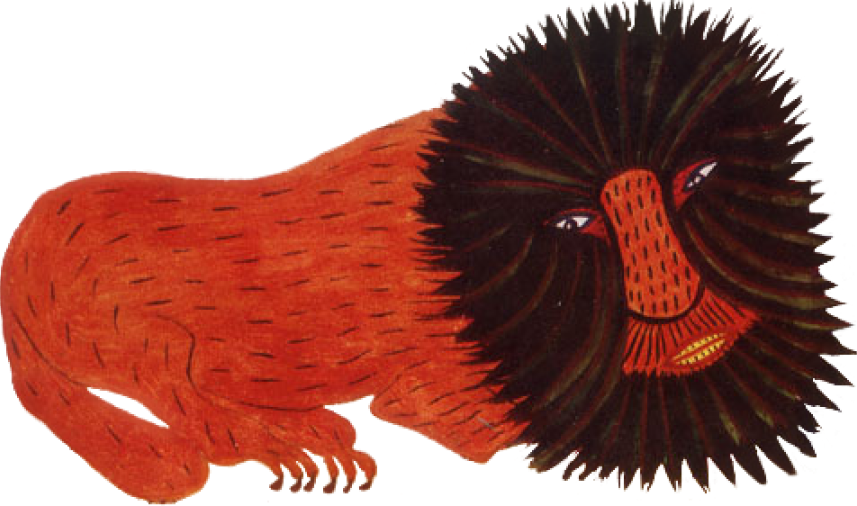
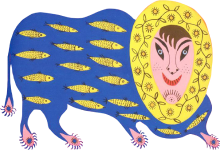
Lion.

quantum drums

Two of the key figures in mapping the new world of the quantum were Gottingen physicists Werner Heisenberg and Max Born.

The first atom that quantum physicists were able to analyse was hydrogen. A hydrogen atom is a simple drum: there is one electron orbiting one proton. The equations determining the frequencies or energy levels of this electron and proton can be solved precisely. The most difficult problem was to determine the possible energy levels in the nucleus. Working out the shape of the mathematical drum that determined these nuclear energy levels was too complicated.

In the 1950s Eugene Wigner and Lev Landau decided to look at the statistics of these energy levels. When they compared the statistics of the energy levels of a random quantum drum with the statistics of energy levels observed in experiment, the fit was excellent. When they looked at the gaps between the energy levels in a uranium nucleus, it seemed as though the energy levels were repelling one another. That was why Freeman Dyson had got so excited during his meeting with Montgomery at Princeton — the graph Montgomery had shown him bore the characteristic stamp of the statistics of energy levels.

The next question, then, was why and how did these two areas - energy levels and Riemann zeros — have anything to do with each other.

The mix of imaginary numbers and waves gave rise to a characteristic set of frequencies unique to drums with their source in quantum physics.

Montgomery’s conversation with Dyson had to be one of the most fortuitous coincidences in scientific history: “It was really serendipity that I happened to be in just the right place.”

A bunch of red flowers on read army day.
Ukrainian milkmaids work hard like miners.
Lion.
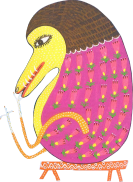
Beaver.

In 1903, Frank Nelson Cole, a professor of mathematics at Columbia University in New York, gave a curious talk to a meeting of the American Mathematical Society. Without saying a word, he wrote one of Mersenne's numbers on one blackboard, and on the next blackboard wrote and multiplied together two smaller numbers.

The audience rose to its feet and applauded — a rare outburst for a roomful of mathematicians. It had been known since 1876 that 267 — 1, a twenty-digit Mersenne number, was not itself prime but the product of two smaller numbers. However, no one knew which ones. It had taken Cole three years of Sunday afternoons to 'crack' this number into its two prime components.

Cole's calculation was regarded as an interesting mathematical curiosity — the standing ovation he received was in recognition of his extraordinary hard labour rather than any intrinsic importance the problem had.

Mathematicians have devised a way to wire this problem of cracking numbers into the codes that protect the world's finances on the Internet. This task is sufficiently tough for numbers with 100 digits that banks and e-commerce are prepared to stake the security of their financial transactions on the impossibly long time it takes — at present — to find the prime factors.

Over two thousand years ago the Greeks proved that every number can be written as a product of prime numbers.

Ukrainian milkmaids work hard like miners.
Lion.
Beaver.
October flowers.
One of the first methods to deliver secret messages using a cylinder, called scytale, was devised by the Spartan army.
For as long as we have been able to communicate, we have needed to deliver secret messages. The ultimate mechanical encoding device was the German Enigma machine used by German forces in WWII.

Even with the Enigma machine, Berlin would still have to dispatch agents to deliver the books detailing the machine settings for encoding messages. If an enemy got their hands on the code book, the game was up. With the Enigma machine, the setting, used to encode a message is the same as the setting used to decode it. Different keys would need to be delivered to each agent.

The system known as public-key cryptography is like a door with two different keys: key A locks the door, but a different key, B, opens it. There is no need for any secrecy around key A. Imagine this door at the entrance to the secure part of a company's website. The company can distribute key A to any visitor who wants to send a secure message, such as the number of their credit card.

Although everyone is using the same key to encode their data, no one can read anyone else's encoded message. Only the company running the website has key B, to unlock and read credit card numbers.

Public-key cryptography was first openly proposed in 1976 in a paper by two mathematicians based at Stanford University, Whit Diffie and Martin Hellman. The Stanford group's paper, entitled 'New directions in cryptography', heralded a new era in encryption and electronic security.

The system known as public-key cryptography is like a door with two different keys: key A locks the door, but a different key, B, opens it.
Lion.
Beaver.
October flowers.
Levanna doing exercise.
if Gauss were
alive today,
he would be a hacker
Peter Sarnak, professor at Princeton University

Ron Rivest at MIT started his attempt to build a public-key cryptography by plundering the wealth of problems computers would take a long time to solve. In offices nearby were two mathematicians, Leonard Adleman and Adi Shamir. The breakthrough came one evening when all three had been invited to dine at a graduate's house to celebrate the first night of Passover.

Martin Gardner had said in his article or Scientific American that the three mathematicians would send a preprint of their paper to anyone who sent them a stamped addressed envelope. “When I get back to MIT there are thousands of these things from all over the world.” The people who were interested were the security agencies. Ansgar Heuser of the BSI, the German National Security Agency, recalls how in the 1980s they considered using RSA in the field. They asked the mathematicians whether the West was stronger than the russians at number theory. Since the answer was “No”, the idea was shelved. But in the following decade RSA proved its worth not just for protecting the lives of spies but also in the public world of business.

They had been thinking for a while about the difficult problem of factorising numbers, a proposal for programs which could crack numbers into their prime building blocks. Under the influence of the Seder wine, Rivest had seen how to program this problem into his new code. When Adleman arrived at the department in MIT next morning, Rivest greeted him with a handwritten manuscript with the names Adleman, Rivest and Shamir blazoned across the top. “So that's how it became RSA.”

RSA:
Ron Rivest
Adi Shamir
Leonard Adleman
Beaver.
October flowers.
Levanna doing exercise.
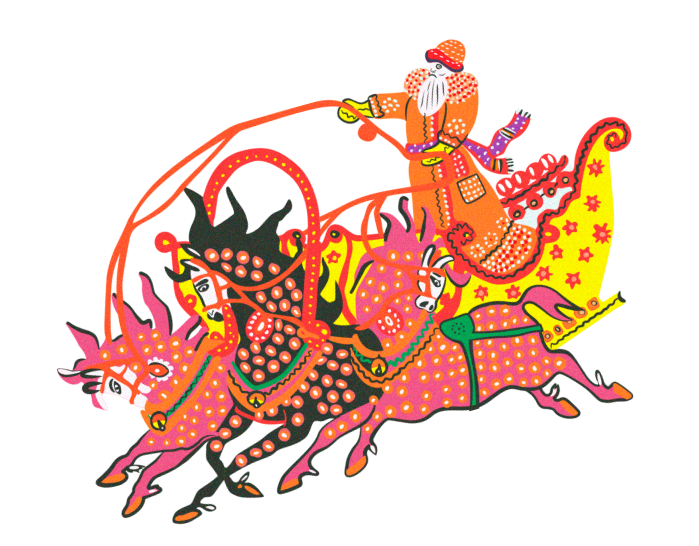
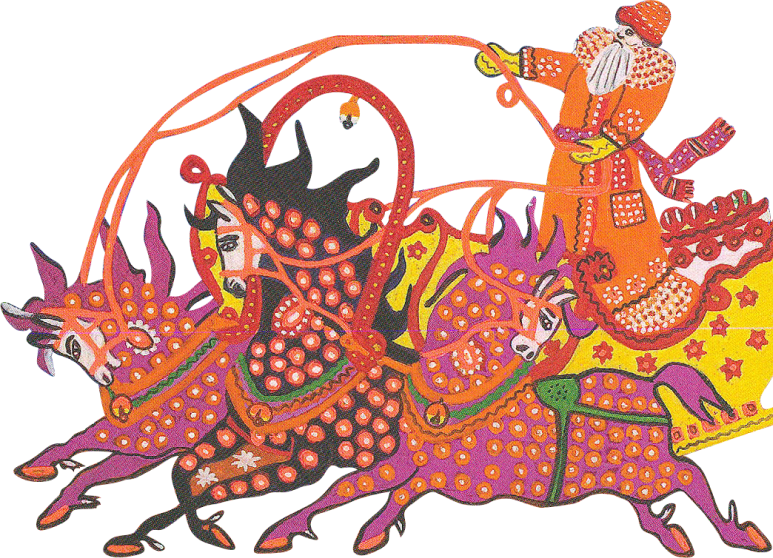
Father frost carries the new year tree.
42 — the answer to the Ultimate Question
Feynman's dictum: "A great deal more is known than has been proved."

The number 42 has held a special significance in popular fiction. In Douglas Adams's The Hitch Hiker's Guide to the Galaxy, Zaphod Beeblebrox discovers that 42 is the Answer to the Ultimate Question of Life, the Universe and Everything.

There are certain attributes of the Riemann zeta function, called its moments, which it was known should give rise to a sequence of numbers. Hardy and Littlewood had shown that the first number in the sequence was 1. Albert Ingham proved in the 1920s that the next number was 2. Conrey and, Amit Ghosh suggested that the third number in the sequence was 42. Conrey and Steve Gonek came up with a guess for the fourth number in the sequence - 24,024.

Keating with his graduate student, Nina Snaith, had created a formula that would generate every number in the sequence. Just before Jon was due to give his lecture, he went up to one of the blackboards in the Schrodinger Institute and calculated what his formula was predicting for the fourth number in the sequence. “When it came out at 24,024 it was just incredible,” recalls Conrey. Seconds later, Keating rushed on to give his lecture where his and Snaith's formula was first publicly announced.

The power of the analogy between the Riemann zeros and quantum physics is twofold. First, it tells us where we should be looking for a solution to the Riemann Hypothesis. And second, it can predict other properties of Riemann's landscape.

THE NUMBER 42 WAS ALSO DEAR TO LEWIS CARROLL. AT THE TRIAL OF THE KNAVE OF HEARTS IN CARROLL'S ALICE IN WONDERLAND, THE KING DECLARES, “RULE FORTY-TWO. ALL PERSONS MORE THAN A MILE HIGH TO LEAVE THE COURT.”
October flowers.
Levanna doing exercise.
Father frost carries the new year tree.
The history of mathematics resembles musical analysis of a symphony. There are a number of themes. You can see when a given theme appears for the first time. Then it gets mixed up with the other themes and the art of the composer consists in handling them all simultaneously. The history of mathematics is just the same
Peter Sarnak, professor at Princeton University

Euclid proved that the primes go on forever. Gauss guessed that the primes were picked out at random, as if determined by the tossing of a coin. Riemann was sucked down a wormhole into an imaginary landscape where the primes turned into music. In this landscape, each point at sea level sounded a note. Armed with a formula he kept secret from the world, Riemann discovered that whereas primes appeared chaotic, the points in his map were full of order. Instead of being randomly dotted around they were lining up in a straight line. He couldn't see far enough across his landscape to tell whether this would always be true, but he believed it would be. The Riemann Hypothesis was born.

Number theory, geometry, analysis, logic, probability theory, quantum physics — all have been drawn together in our search for the Riemann Hypothesis. We marvel at its extraordinary interconnectedness: mathematics has gone from a subject of patterns to a subject of connections.

The primes are central to the security of the modern electronic world, and their resonances with quantum physics may have something to tell us about the nature of the physical world. Until then, we shall listen enthralled by this unpredictable mathematical music, unable to master its twists and turns.

The primes are central to mathematics, the building blocks from which everything else follows.
To support Ukranian
art and culture

3rd day of the 8-year war
that has lasted over 4 centuries.

februray 27, 2022

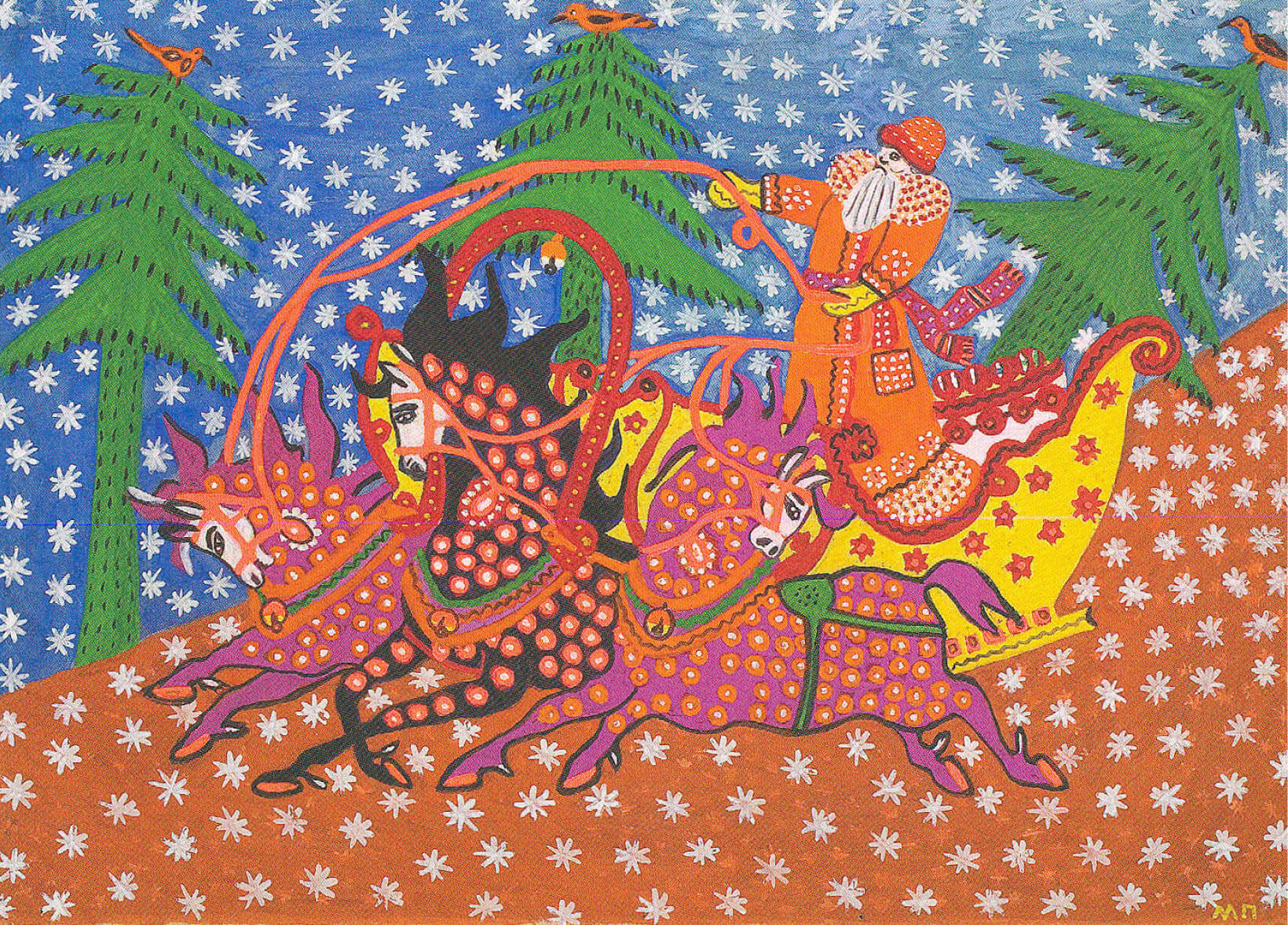
On this day, russian troops destroyed Ivankiv museum that housed unique works of the brilliant Ukrainian artist - Maria Prymachenko.

At Pri-Num we have an annual undercover tradition creating limited-edition printed calendars as a New Year gift for our friends and partners.

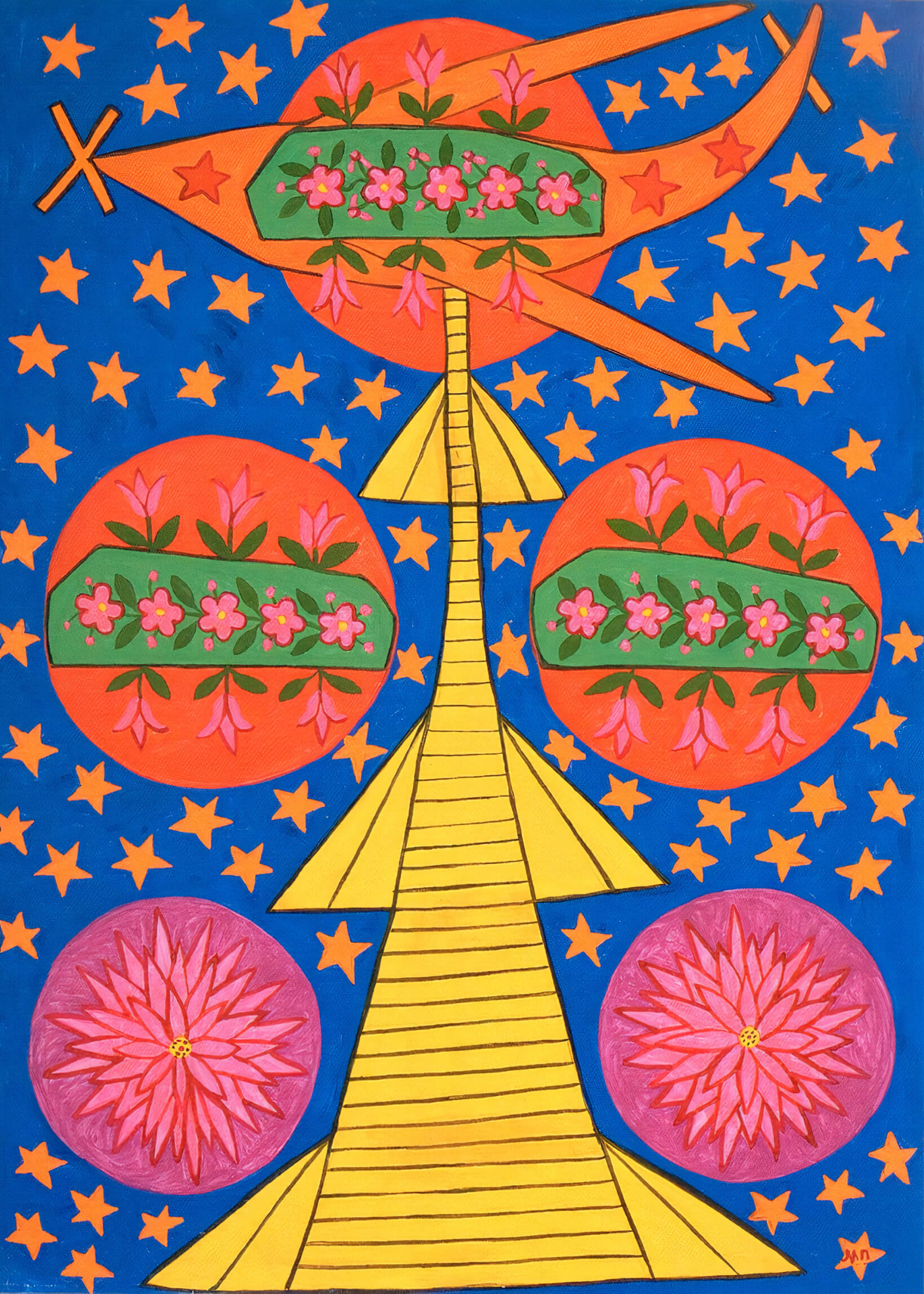
By chance our 2022 calendar edition theme was dedicated to the properties of prime numbers creatively reinterpreted through Maria Prymachenko’s works.

Therefore, we would like to dedicate this website to Prymachenko’s enduring legacy and creative spirit.

At our Studio we believe that an artist’s heritage and nation’s memory can never be destroyed by bombs and bullets.

Full experience is optimized for our desktop
site.
THE MUSIC OF THE PRIMES
3rd day of the 8-year war that has lasted over 4 centuries.
februray 27, 2022

In the village of Ivankov, Kyiv region russian troops destroyed a local museum that housed unique works by Maria Prymachenko. Ten of her works were saved by a museum guard who entered the museum whilst it was on fire.

At Pri-Num we have an annual undercover tradition creating a limited-edition calendar as New Year gift for a close circle of friends and partners. Usually, we choose a math concept and creatively reimagine it. By chance 2022 calendar edition theme was around properties of prime numbers creatively reinterpreted through Maria Prymachenko’s works that we greatly admire.

This website is a dedication to the artistic heritage and Prymachenko’s enduring legacy that cannot be destroyed by ruthless shelling.

Art and nation’s memory can never be eradicated by bombs and bullets.

THERE'S SO MANY DIFFERENT WORLDS SO MANY DIFFERENT SUNS AND WE HAVE JUST ONE WORLD BUT WE LIVE IN DIFFERENT ONES.
Dire Straits “Brothers in Arms”
A fish king has caught a hoopoe and is full of joy.
Prime numbers are the very atoms of arithmetic.
A list of the primes is the mathematician's own periodic table

Prime numbers are the very atoms of arithmetic. The primes are those indivisible numbers that cannot be written as two smaller numbers multiplied together. The numbers 13 and 17 are prime, whilst 15 is not since it can be written as 3 times 5. Look through a list of prime numbers, and you'll find that it's impossible to predict when the next prime will appear. The list seems chaotic, random, and offers no clues as to how to determine the next number.

Despite their randomness, prime numbers - more than any other part of our mathematical heritage — have a timeless, universal character.

Despite their randomness,
prime numbers have a timeless
universal character.
menagerie.
The Chinese believed that the primes were macho numbers which resisted any attempt to break them down into a product of smaller numbers.
When things get too complicated, it sometimes makes sense to stop and wonder: Have I asked the right question?
Enrico Bombieri, “Prime Territory” in The Science

The first evidence that humankind knew about the special qualities of prime numbers is the Ishango bone that dates from 6500 bc, that was discovered in 1960 in the mountains of central equatorial Africa. Marked on it are three columns containing four groups of notches. In one of the columns we find 11, 13, 17 and 19 notches, a list of all the primes between 10 and 20.

The Chinese were the first culture attributed female characteristics to even numbers and male to odd numbers. The primes were macho numbers which resisted any attempt to break them down into a product of smaller numbers.

The ancient Greeks first discovered, in the 4th century BC that every number could be constructed by multiplying prime numbers together.

The librarian of the ancient Greek research institute in Alexandria was the first person we know of to have produced tables of primes. Eratosthenes in the 3rd century BC discovered a procedure for determining which numbers are prime in a list of the first 1,000 numbers. The procedure was later christened the sieve of Eratosthenes.
In the 4th century BC the Greeks discovered that every number could be constructed by multiplying prime numbers together.
An outer space memory.
Languages die and mathematical ideas do not. “Immortality” may be a silly word, but probably a mathematician has the best chance of whatever it may mean.
Michael Berry, University of Bristol

“Who of us would not be glad to cast a glance at the next advances of our science and at the secrets of its development during future centuries?”

One day in August 1900 David Hilbert challenged the audience of Sorbonne with a list of 23 problems that he believed should set the course for the mathematical explorers of the 20th century.

But there was one problem, the 8th on Hilbert's list, which looked as if it would survive the century without a champion: the Riemann Hypothesis.

There is a German myth about Frederick Barbarossa, a much-loved German emperor who died during the Third Crusade. A legend grew that he was still alive, asleep in a cavern in the Kyffhauser Mountains. He would awake only when Germany needed him. Somebody allegedly asked Hilbert, “If you were to be revived like Barbarossa, after 500 years, what would you do?” His reply: “I would ask, ”Has someone proved the Riemann Hypothesis?””

As the 20th century drew to a close, most mathematicians had resigned themselves to the fact that this jewel amongst all of Hilbert's problems was not only likely to outlive the century but might still be unanswered when Hilbert awoke from his 500-year slumber.

Has
someone
proved
the
Riemann
Hypothesis?
Lovely spring, what did you bring.
Riemann’s ideas would open up
radically new vistas
on the primes.
The Riemann Hypothesis is a mathematical statement that you can decompose the primes into music. That the primes have music in them is a poetic way of describing this mathematical theorem. However, it's highly post-modern music
Michael Berry, University of Bristol

The connection that Riemann managed to find between prime numbers and the points at sea level in the zeta landscape was about as direct as one could hope for. Riemann was able to produce an exact formula for the number of primes up to N by using the coordinates of these zeros.

The formula that Riemann concocted had two key ingredients. The first was a new function R(N) for estimating the number of primes less than N. Riemann realised that by using the points in the map of imaginary numbers that marked the places where the zeta landscape was at sea level, he could get rid of these errors and produce an exact formula counting the number of primes. This would be the second key ingredient in Riemann's formula.

Riemann made the stunning discovery — his function R(N) gave a reasonably good count of the number of primes up to N. By adding to this guess the height of each wave above the number N, he found he could get the exact number of primes. The error had been eliminated completely. Riemann had unearthed the Holy Grail: an exact formula for the number of primes up to N.

Riemann had unearthed the Holy Grail: an exact formula for the number of primes up to N.
A bunch of red flowers on read army day.
A problem in number theory is as timeless as a true work of art

David Hilbert, Introduction to Legh Wilber Reid, The Elements of the Theory of Algebraic Numbers

What Riemann had done was to take each of the points on the map of the imaginary world that sat at sea level. Out of each point he had created a wave. By combining all these waves, he had an orchestra that played the music of the primes.

The zeros he calculated seemed to be miraculously arranged in a straight line running north-south through the landscape. It appeared as if every point at sea level had the same east-west coordinate, equal to 1/2.

Riemann's calculations indicated that these zeros were lining up as if along some mystical ley line running through the landscape. His belief that every point at sea level in his landscape would be found on this straight line is what has become known as the Riemann Hypothesis.

Riemann looked at the image of the primes in the mirror that separated the world of numbers from his zeta landscape. He saw the chaotic arrangement of the prime numbers on one side of the mirror transform into the strict regimented order of the zeros on the other side of the mirror.

What Riemann had also discovered was evidence of some ley line running through this landscape. The Riemann's ley line is now referred to as the critical line. Suddenly, the puzzle of the randomness of the primes in the real world has been replaced by the quest to understand the harmony of this imaginary looking-glass landscape.

This beast went a catching sparrows.
I propose to consider the question, “Can machines think?”
Alan Turing, Computing Machinery and Intelligence

Turing came up with the idea of special machines that could effectively be made to behave like any person or machine that was doing arithmetic computations. They would later be known as Turing machines.

Turing's idea was based on a discovery made in 1873 by Georg Cantor, a German mathematician. He had found that there were different sorts of infinities. Cantor had shown that some decimal numbers would always be left over, however the fractions were matched with the real numbers. Turing took this technique and used it to produce a 'left-over' true statement for which the Turing machine could not possibly decide whether a proof existed. The beauty of Cantor's argument was that if you tried to adapt the machine to include this missing statement, there would always be another statement that had been missed. Turing had shown that none of his Turing machines could answer Hilbert's Decision Problem. This was his breakthrough: the idea of a universal machine.

By 1950 he had his new machine up and running and ready to start navigating the zeta landscape. Ted Titchmarsh had confirmed that the first 1,041 points at sea level fulfilled the Riemann Hypothesis. Turing went further and managed to make his machine check as far as the first 1,104 zeros and then, as he wrote, 'unfortunately at this point the machine broke down'.

Turing’s universal machine
marked
the dawn
of the computer age.
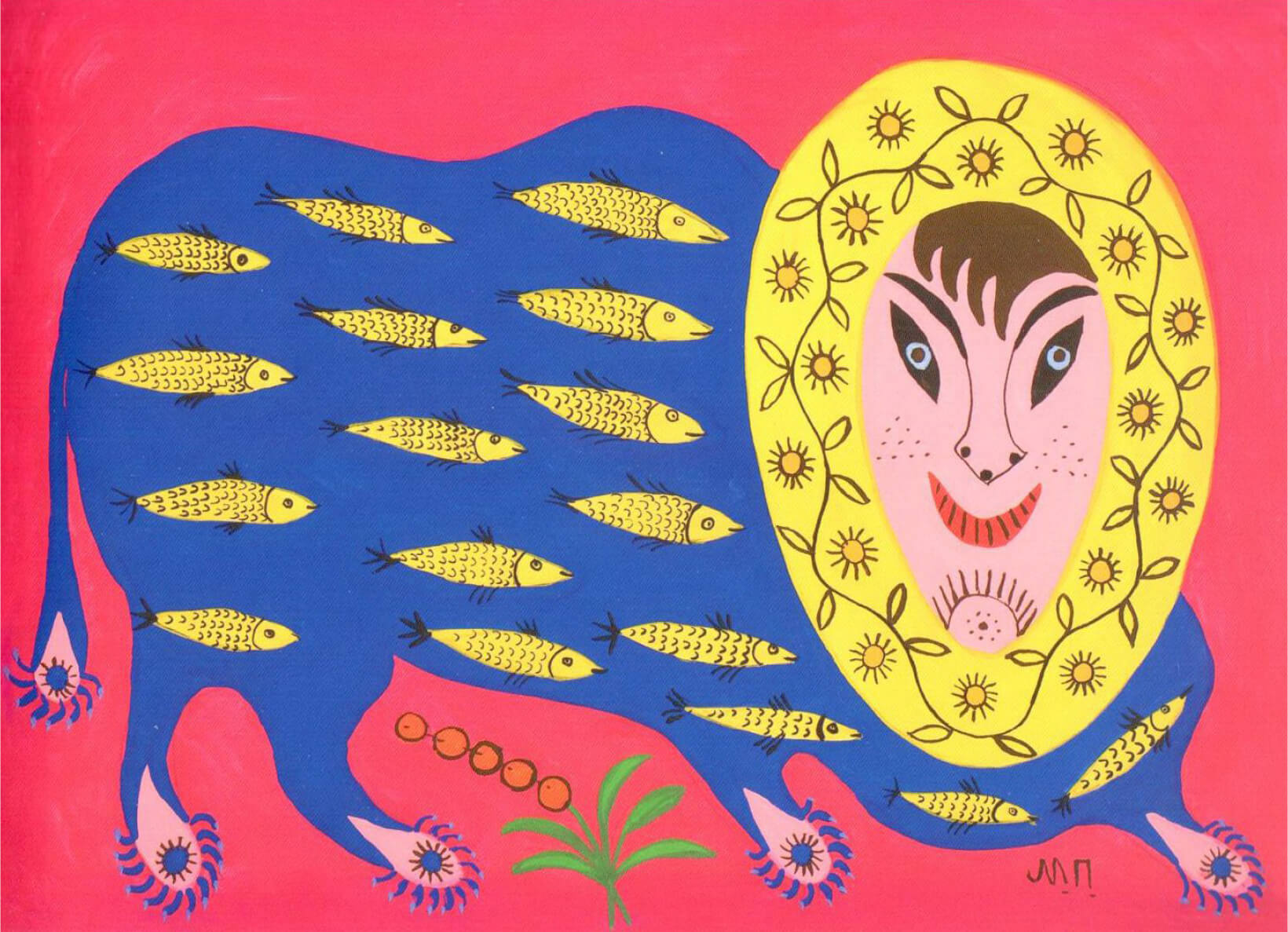
Ukrainian milkmaids work hard like miners.
Quantum drums

Two of the key figures in mapping the new world of the quantum were Gottingen physicists Werner Heisenberg and Max Born.

The first atom that quantum physicists were able to analyse was hydrogen. A hydrogen atom is a simple drum: there is one electron orbiting one proton. The equations determining the frequencies or energy levels of this electron and proton can be solved precisely. The most difficult problem was to determine the possible energy levels in the nucleus. Working out the shape of the mathematical drum that determined these nuclear energy levels was too complicated.

In the 1950s Eugene Wigner and Lev Landau decided to look at the statistics of these energy levels. When they compared the statistics of the energy levels of a random quantum drum with the statistics of energy levels observed in experiment, the fit was excellent. When they looked at the gaps between the energy levels in a uranium nucleus, it seemed as though the energy levels were repelling one another. That was why Freeman Dyson had got so excited during his meeting with Montgomery at Princeton — the graph Montgomery had shown him bore the characteristic stamp of the statistics of energy levels.

The next question, then, was why and how did these two areas - energy levels and Riemann zeros — have anything to do with each other.

The mix of imaginary numbers and waves gave rise to a characteristic set of frequencies unique to drums with their source in quantum physics.
Montgomery’s conversation with Dyson had to be one of the most fortuitous coincidences in scientific history: “It was really serendipity that I happened to be in just the right place.”
Lion.
Do you not feel and hear it? Do I alone hear this melody so wondrously and gently sounding. . .
Richard Wagner, Tristan und Isolde (Act 3, Scene 3)

In 1903, Frank Nelson Cole, a professor of mathematics at Columbia University in New York, gave a curious talk to a meeting of the American Mathematical Society. Without saying a word, he wrote one of Mersenne's numbers on one blackboard, and on the next blackboard wrote and multiplied together two smaller numbers.

The audience rose to its feet and applauded — a rare outburst for a roomful of mathematicians. It had been known since 1876 that 267 — 1, a twenty-digit Mersenne number, was not itself prime but the product of two smaller numbers. However, no one knew which ones. It had taken Cole three years of Sunday afternoons to 'crack' this number into its two prime components.

Cole's calculation was regarded as an interesting mathematical curiosity — the standing ovation he received was in recognition of his extraordinary hard labour rather than any intrinsic importance the problem had.

Mathematicians have devised a way to wire this problem of cracking numbers into the codes that protect the world's finances on the Internet. This task is sufficiently tough for numbers with 100 digits that banks and e-commerce are prepared to stake the security of their financial transactions on the impossibly long time it takes — at present — to find the prime factors.

Over two thousand years ago the Greeks proved that every number can be written as a product of prime numbers.
Beaver.
One of the first methods to deliver secret messages using a cylinder, called scytale, was devised by the Spartan army.

For as long as we have been able to communicate, we have needed to deliver secret messages. The ultimate mechanical encoding device was the German Enigma machine used by German forces in WWII.

Even with the Enigma machine, Berlin would still have to dispatch agents to deliver the books detailing the machine settings for encoding messages. If an enemy got their hands on the code book, the game was up. With the Enigma machine, the setting, used to encode a message is the same as the setting used to decode it. Different keys would need to be delivered to each agent.

The system known as public-key cryptography is like a door with two different keys: key A locks the door, but a different key, B, opens it. There is no need for any secrecy around key A. Imagine this door at the entrance to the secure part of a company's website. The company can distribute key A to any visitor who wants to send a secure message, such as the number of their credit card.

Although everyone is using the same key to encode their data, no one can read anyone else's encoded message. Only the company running the website has key B, to unlock and read credit card numbers.
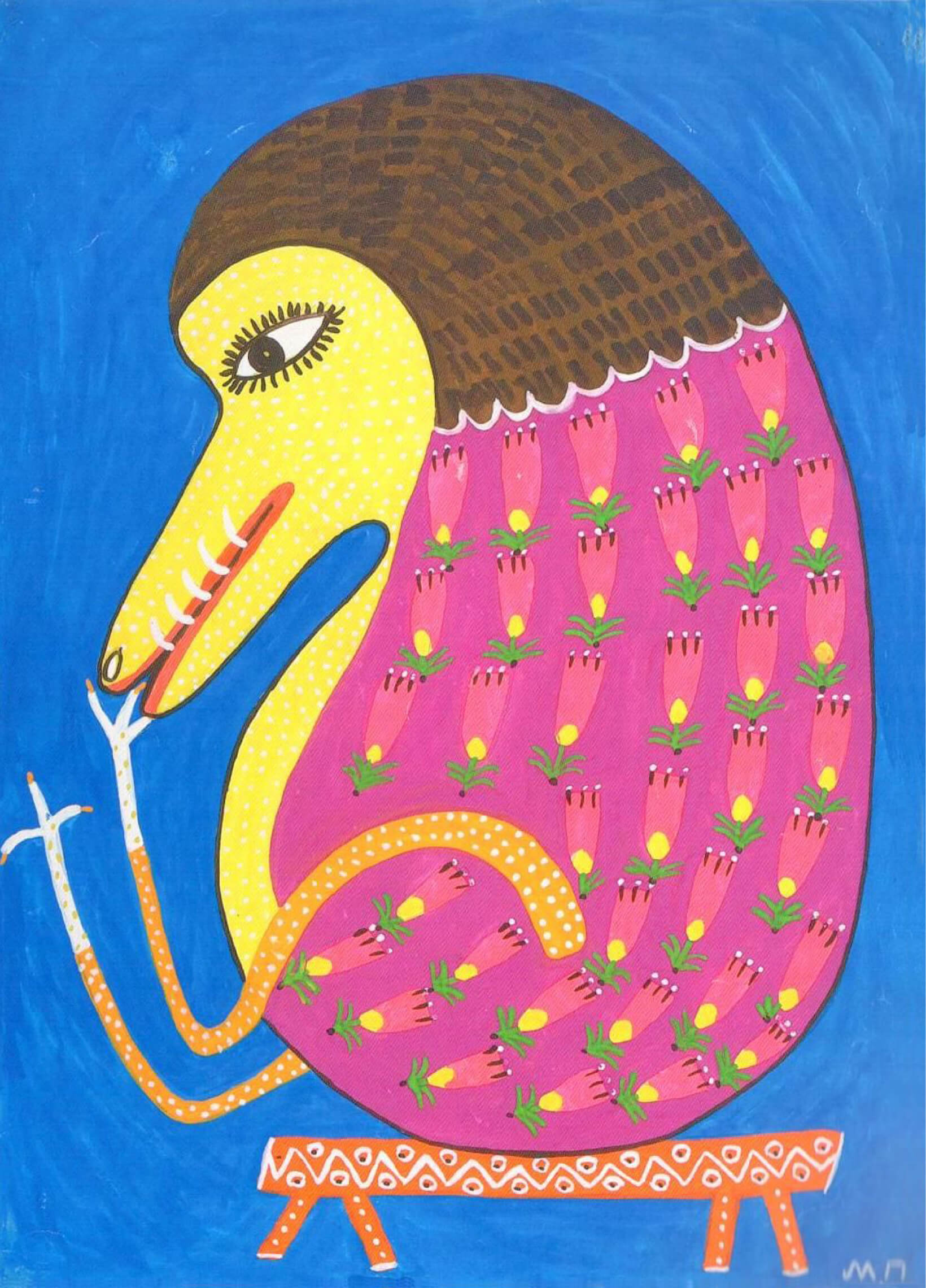
Public-key cryptography was first openly proposed in 1976 in a paper by two mathematicians based at Stanford University, Whit Diffie and Martin Hellman. The Stanford group's paper, entitled 'New directions in cryptography', heralded a new era in encryption and electronic security.

The system known as public-key cryptography is like a door with two different keys: key A locks the door, but a different key, B, opens it.
October flowers.
ifGauss were
alive today,
he would be a hacker
Peter Sarnak, professor at Princeton University

Ron Rivest at MIT started his attempt to build a public-key cryptography by plundering the wealth of problems computers would take a long time to solve. In offices nearby were two mathematicians, Leonard Adleman and Adi Shamir. The breakthrough came one evening when all three had been invited to dine at a graduate's house to celebrate the first night of Passover.

Martin Gardner had said in his article or Scientific American that the three mathematicians would send a preprint of their paper to anyone who sent them a stamped addressed envelope. “When I get back to MIT there are thousands of these things from all over the world.” The people who were interested were the security agencies. Ansgar Heuser of the BSI, the German National Security Agency, recalls how in the 1980s they considered using RSA in the field. They asked the mathematicians whether the West was stronger than the russians at number theory. Since the answer was “No”, the idea was shelved. But in the following decade RSA proved its worth not just for protecting the lives of spies but also in the public world of business.

They had been thinking for a while about the difficult problem of factorising numbers, a proposal for programs which could crack numbers into their prime building blocks. Under the influence of the Seder wine, Rivest had seen how to program this problem into his new code. When Adleman arrived at the department in MIT next morning, Rivest greeted him with a handwritten manuscript with the names Adleman, Rivest and Shamir blazoned across the top. “So that's how it became RSA.”

Levanna doing exercise.
42 — the answer to the Ultimate Question
Feynman's dictum:
"A great deal more
is known than has
been proved."

The number 42 has held a special significance in popular fiction. In Douglas Adams's The Hitch Hiker's Guide to the Galaxy, Zaphod Beeblebrox discovers that 42 is the Answer to the Ultimate Question of Life, the Universe and Everything.

There are certain attributes of the Riemann zeta function, called its moments, which it was known should give rise to a sequence of numbers. Hardy and Littlewood had shown that the first number in the sequence was 1. Albert Ingham proved in the 1920s that the next number was 2. Conrey and, Amit Ghosh suggested that the third number in the sequence was 42. Conrey and Steve Gonek came up with a guess for the fourth number in the sequence - 24,024.

Keating with his graduate student, Nina Snaith, had created a formula that would generate every number in the sequence. Just before Jon was due to give his lecture, he went up to one of the blackboards in the Schrodinger Institute and calculated what his formula was predicting for the fourth number in the sequence. “When it came out at 24,024 it was just incredible,” recalls Conrey. Seconds later, Keating rushed on to give his lecture where his and Snaith's formula was first publicly announced.

The power of the analogy between the Riemann zeros and quantum physics is twofold. First, it tells us where we should be looking for a solution to the Riemann Hypothesis. And second, it can predict other properties of Riemann's landscape.

THE NUMBER 42 WAS ALSO DEAR TO LEWIS CARROLL. AT THE TRIAL OF THE KNAVE OF HEARTS IN CARROLL'S ALICE IN WONDERLAND, THE KING DECLARES, “RULE FORTY-TWO. ALL PERSONS MORE THAN A MILE HIGH TO LEAVE THE COURT.”
Father frost carries the new year tree.
The history of mathematics resembles musical analysis of a symphony. There are a number of themes. You can see when a given theme appears for the first time. Then it gets mixed up with the other themes and the art of the composer consists in handling them all simultaneously. The history of mathematics is just the same
Peter Sarnak, professor at Princeton University

Euclid proved that the primes go on forever. Gauss guessed that the primes were picked out at random, as if determined by the tossing of a coin. Riemann was sucked down a wormhole into an imaginary landscape where the primes turned into music. In this landscape, each point at sea level sounded a note. Armed with a formula he kept secret from the world, Riemann discovered that whereas primes appeared chaotic, the points in his map were full of order. Instead of being randomly dotted around they were lining up in a straight line. He couldn't see far enough across his landscape to tell whether this would always be true, but he believed it would be. The Riemann Hypothesis was born.

Number theory, geometry, analysis, logic, probability theory, quantum physics — all have been drawn together in our search for the Riemann Hypothesis. We marvel at its extraordinary interconnectedness: mathematics has gone from a subject of patterns to a subject of connections.

The primes are central to the security of the modern electronic world, and their resonances with quantum physics may have something to tell us about the nature of the physical world. Until then, we shall listen enthralled by this unpredictable mathematical music, unable to master its twists and turns.
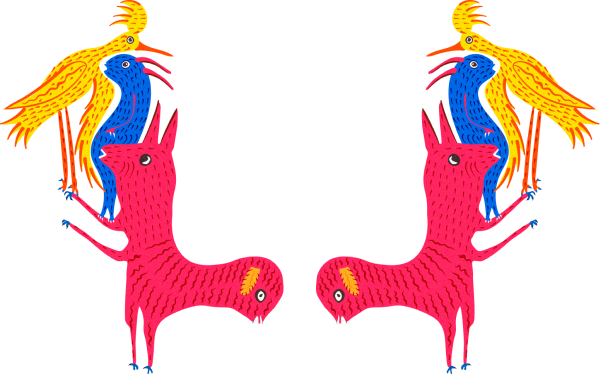
The primes are central to mathematics, the building blocks from which everything else follows.

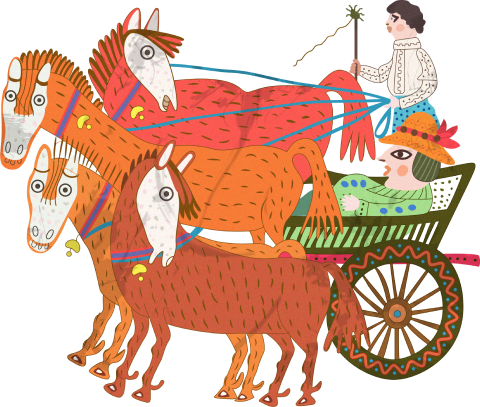
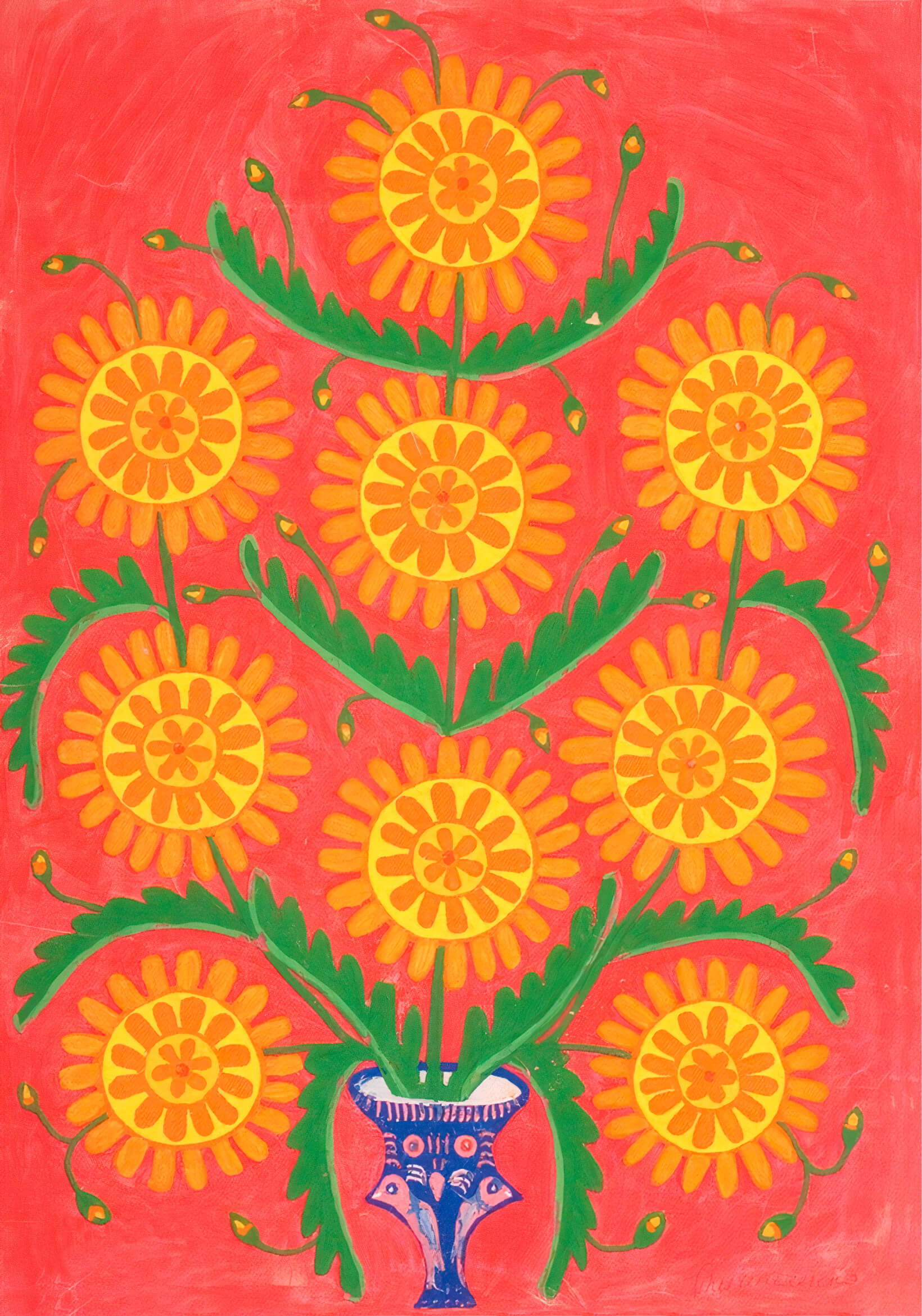
The primes now affect all our lives as they protect the world's electronic secrets from the prying eyes of Internet hackers.
To support Ukranian art and culture